
Our current wards do not allow for ratepayers to be fairly represented and may even contravene the Municipal Act. Win or lose on Thursday, I challenge council to correct the imbalance between population and council seats.
Provincial regulations specify that wards within a municipality should contain roughly the same number of voters. This gives equal political representation to all residents – a cornerstone of democracy.
However in Oakland-Wawanesa, one ward has significantly more population than the other two.
Ward Two-Rural North has 665 registered voters, compared with 440 in Ward Three-Rural South and 438 in Ward One-Wawanesa. Yet, each ward elects two councillors. Each ward gets two votes at the council table.
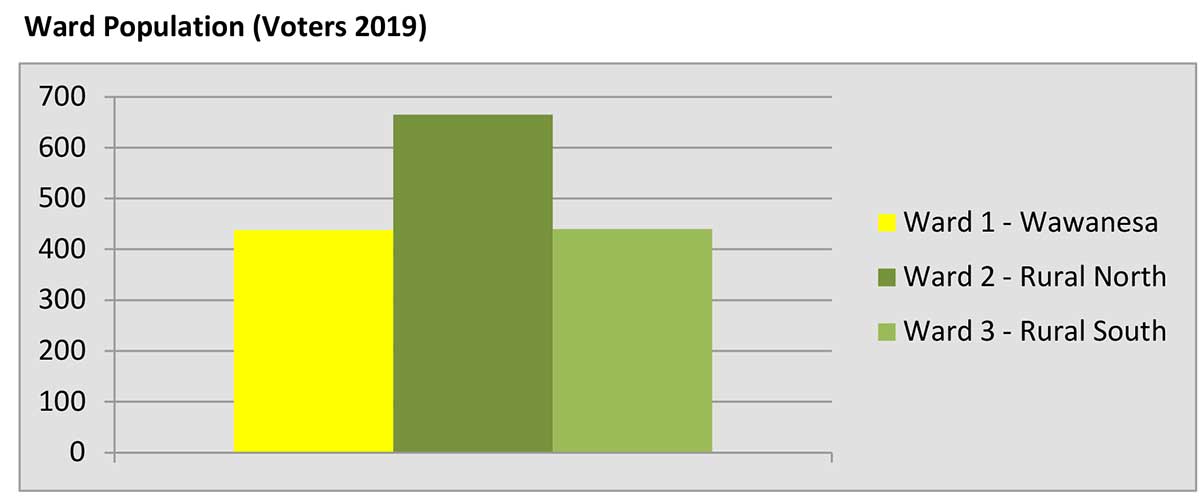
In the past, to maintain fair representation, the provincial government has told municipalities to keep population differences between wards within 25%. In Oakland-Wawanesa, the existing wards obviously violate this guideline. Ward Two has 51% more voters than either Ward One or Ward Three.
This imbalance becomes even more acute when you factor in taxation.
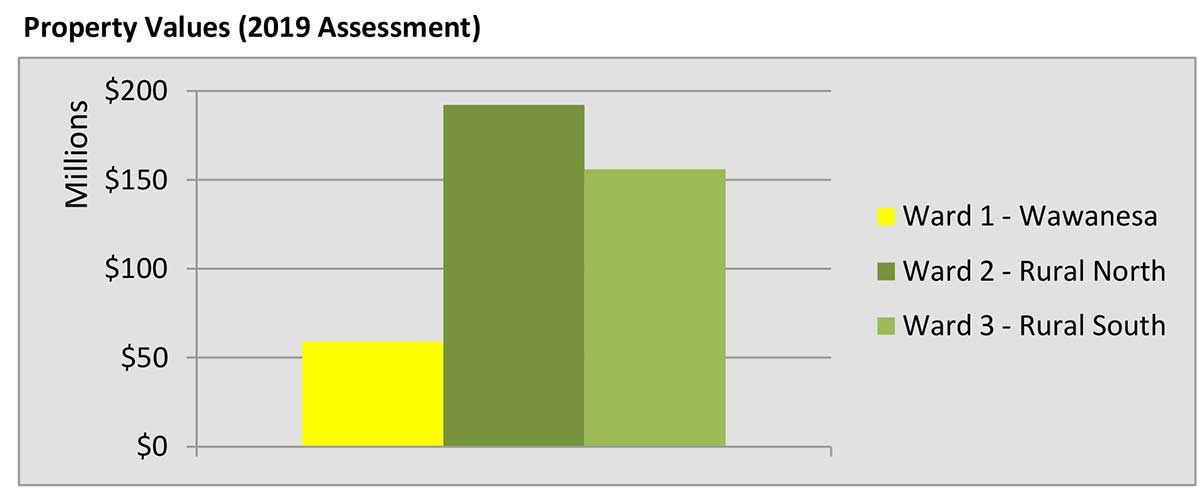
Ward Two contains $192-million in assessed property, compared to $156-million in Ward Three and $55-million in Wawanesa. With almost half the municipality’s tax base, Ward Two has only one third of council votes.
By comparison, village residents contribute only 15% of the shared costs to run the municipality but elect 33% of councillors. With the current head of council being a Wawanesa resident, village voting strength increases to 43%.
Using taxation as a yardstick, Wawanesa should be represented by one councillor instead of two.
It’s time to rework council to more accurately represent population and taxation.
Prior to the October 2018 election, the Municipality of Whitehead converted six equal-sized wards into two that are different in geographic size but contain roughly the same number of residents.
Oakland-Wawanesa could do the same, splitting the municipality into east and west wards, with 2 or 3 councillors per ward, plus a reeve elected at-large. The west would contain high density acreages along Highway 10, plus Nesbitt and Carroll. In the east, Wawanesa offers significant population.
Wawanesa would become a Local Urban District (LUD) with a separate mill rate and budget, just like neighbouring municipalities have done with Minto, Alexander and Oak Lake. Instead of electing Wawanesa councillors, a residents’ committee would manage the village affairs and report to council.
First, council must acknowledge the flaws in our current system of representation and taxation. Then, we can begin a process of public consultation and develop a blueprint for the future that is fair for all.
Regards,
-Glen